Clear Source Herbs
Chinese Asparagus Root - Asparagus cochinchinensis Radix - Tian Men Dong - ND Grade
Chinese Asparagus Root - Asparagus cochinchinensis Radix - Tian Men Dong - ND Grade
Couldn't load pickup availability
10% of this sale goes to the Life In Many Colors Foundation, supporting burn and trauma survivors.
From China
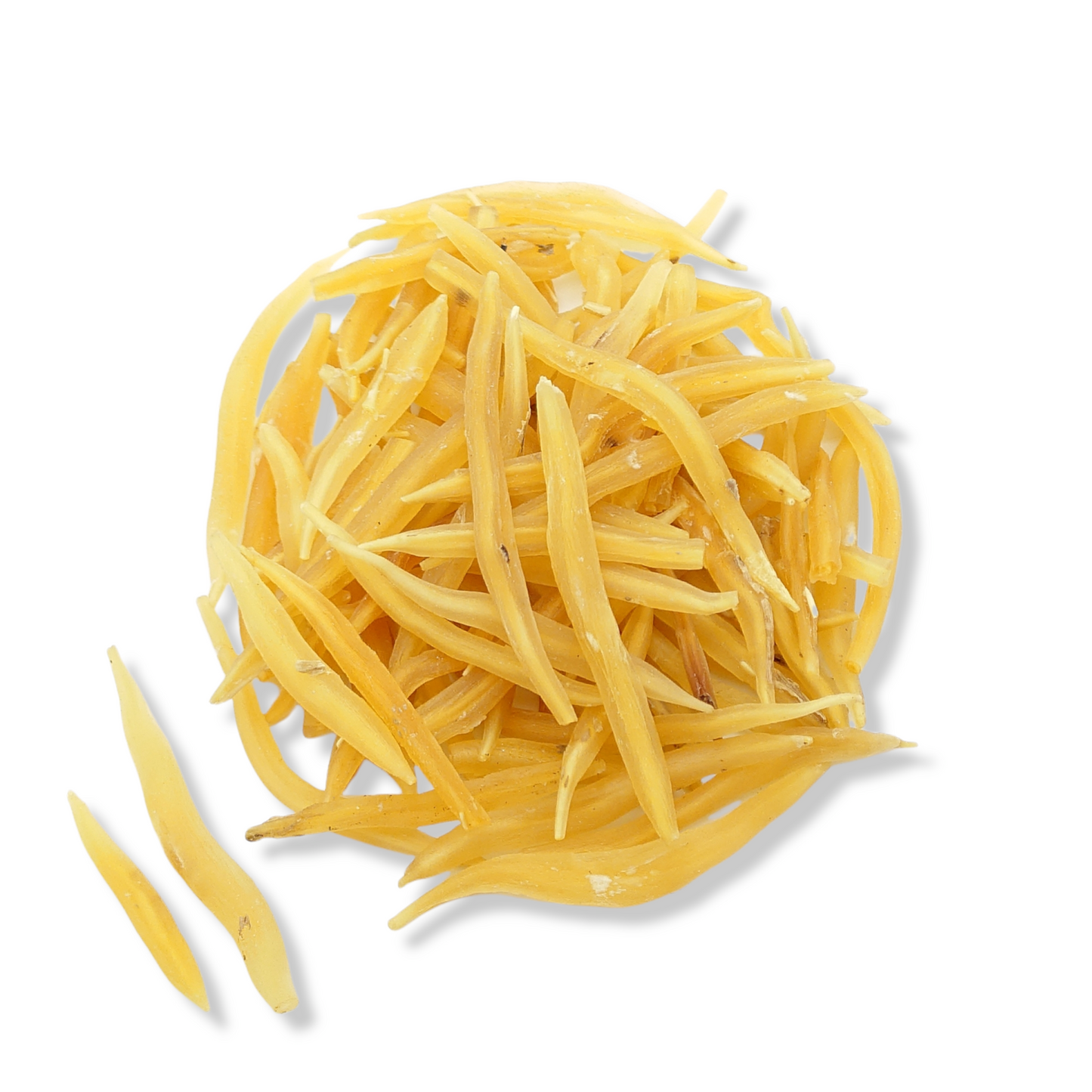
Not the asparagus you eat. Tian men dong comes from a climbing asparagus relative, not the spears in a supermarket. What is harvested is the tuber, and it is boiled, peeled and dried until it turns semi-translucent and slightly sticky, closer to a piece of amber candy than to a root.
The name means something like heavenly winter cordial, and it is one of the older entries in the Chinese materia medica - it appears in the Shennong Ben Cao Jing alongside reishi and astragalus. It grows through the warmer central and southern provinces.
How it is used: simmered into decoctions and long-cooked soups. Sweet at the front and then distinctly bitter, with a chewy honeyed texture that surprises people.
Chinese Asparagus Root – Asparagus cochinchinensis Radix – Tian Men Dong – ND Grade
Botanical Name: Asparagus cochinchinensis
Common Names: Chinese Asparagus Root / Tian Men Dong / 天门冬 / 天門冬
Grade: ND Grade (Tested free of sulfur and pesticide residues)
Origin: Grown and harvested in China
Product Overview
Chinese Asparagus Root, known as Tian Men Dong, is a time-honored botanical widely used across traditional East Asian herbal kitchens.
Naturally sweet, slightly bitter, and traditionally described as “very cold,” Tian Men Dong has been featured for generations in classic decoctions, nourishing soups, and seasonal herbal blends.
Our ND Grade Tian Men Dong is carefully washed, sliced, and naturally dried without sulfur or additives. Its clean aroma, smooth texture, and traditional character make it ideal for tea, decoction, and culinary herbal recipes.
How to Use
Herbal Decoction
- Please search and refer to educational resources on how to incorporate this herb into your soup or decoction. Generally, simmer 6–12 g of Tian Men Dong in water for 20–30 minutes.
Tea or Infusion
- Commonly steeped with botanicals such as Mai Men Dong (Ophiopogon Root) or Bai He (Lily Bulb) in traditional East Asian tea blends.
Culinary Use
- Add to soups, congee, or herbal broths
Intended Use & Preparation
-
Not for direct consumption in dry form.
-
To be prepared and consumed as tea, decoction, or soup.
-
Bring to a boil and simmer for at least 15 minutes for traditional decoctions, or steep in hot water for an extended period when used as tea.
Features
-
ND Grade — tested for heavy metals and free of sulfur and pesticide residues
-
Naturally dried to preserve aroma and traditional character
-
Packaged in resealable pouches for freshness
-
Traceable to the growing region
Traditional Context (TCM Framework)
In Traditional Chinese Medicine (TCM), Tian Men Dong is traditionally described as sweet, bitter, and very cold, and associated with the Lung and Kidney channels.
It is widely referenced in classical formulas and appears frequently in slow-simmered decoctions and seasonal herbal soups within traditional East Asian practice.
Important Notes
-
Sold as a raw food ingredient, not a finished dietary supplement.
-
Store in a cool, dry place away from direct sunlight.
-
Best used under the guidance of a trained herbal practitioner.
-
These statements have not been evaluated by the Food and Drug Administration (FDA). This product is not intended to diagnose, treat, cure, or prevent any disease.